Planet Four: Inter- and Intra-annual Variability of Dark Regolith on Ice Coverage at the Martian South Polar Region

Michael Aye

2026-03-17

Planet Four project

Science case

Science case

Science case temporal

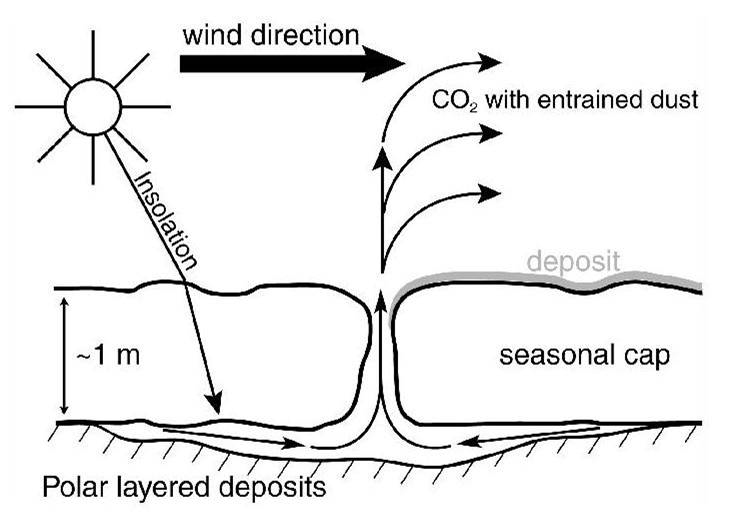
Science case: Kieffer model

  • Jet deposits are aligned by prevalent winds at the time!
  • Mapping these features enables the first large area knowledge of prevailing winds on Mars!
    • on intra-seasonal timescales, not only over many years.

Active areas around south pole
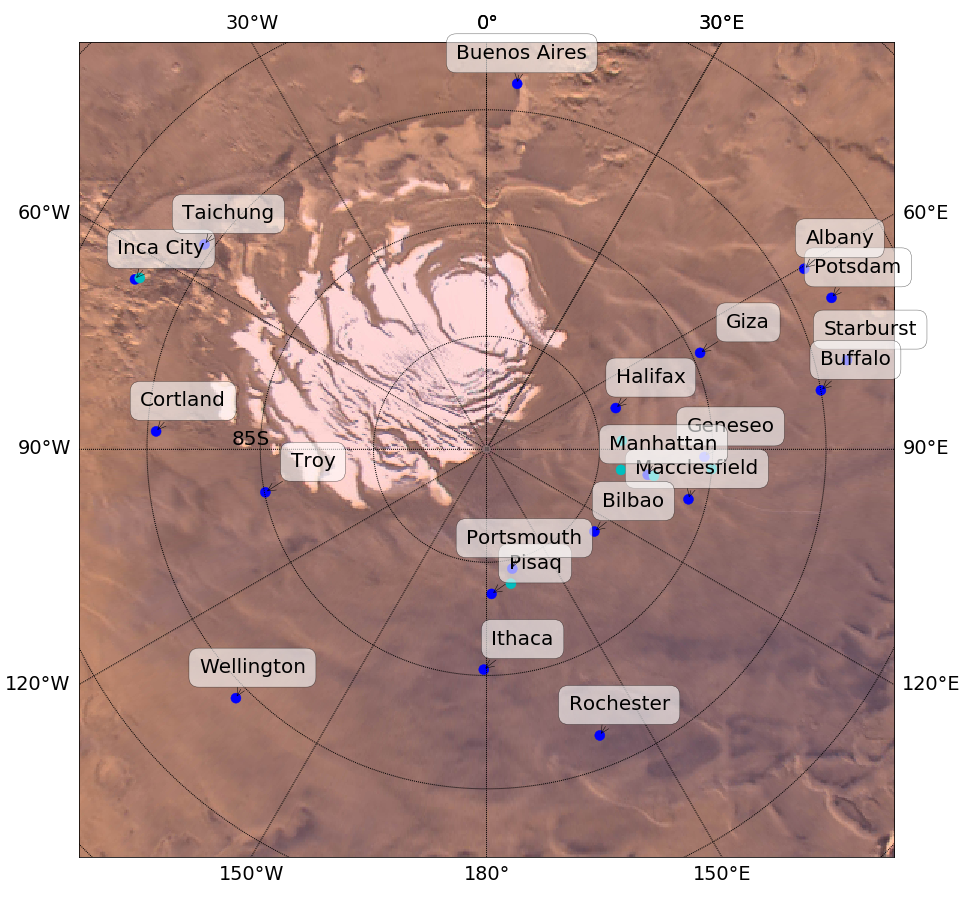
  • Seasonal campaigns at most of these areas!
    • -> Lots of huge HiRISE image data

Input data

  • 221 HiRISE images from MY 29/30
    • new catalog: 469 studied images from MY 28-33 (6 years of data)
  • split up into over 30,000 image screen-sized tiles
    • now over 64,000 tiles
  • Tiles are being “anonymized”, to prevent bias
  • The data input and reduction pipelines need to track everything

Interface

Interface return

Difficulty: What (contrast) defines the “end” of a surface feature?

Minimum of 30 different volunteers per image tile!

=> quite slow progress

Reduction pipeline
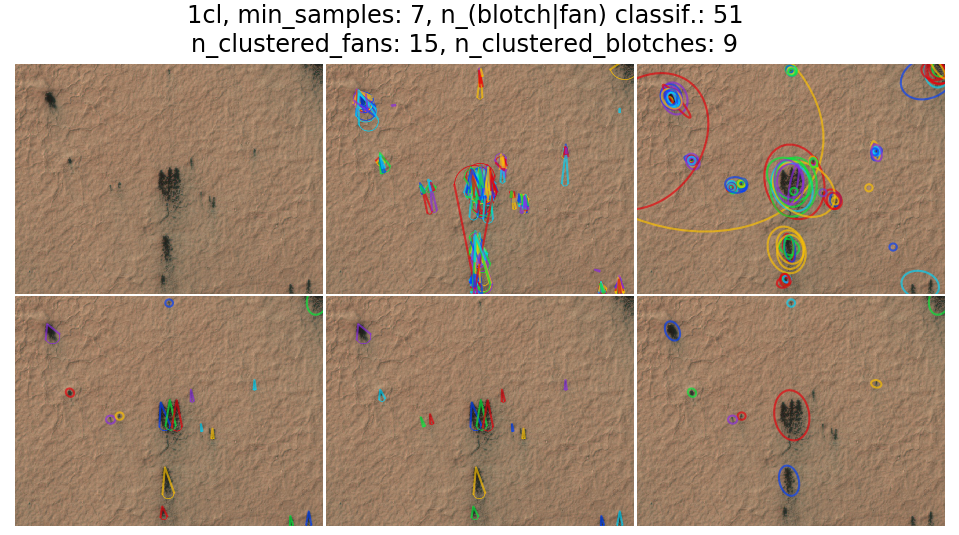
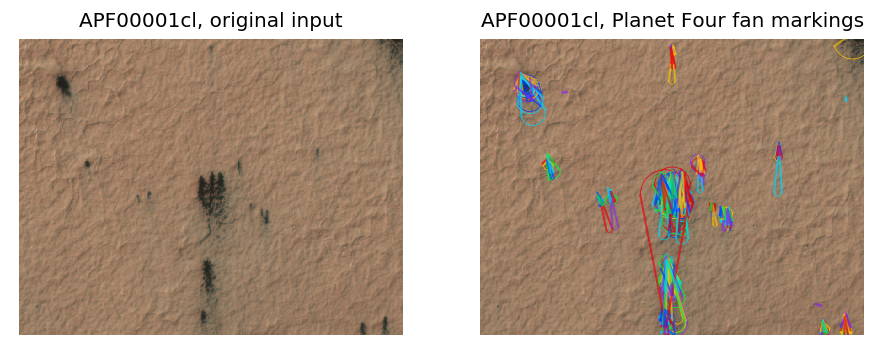
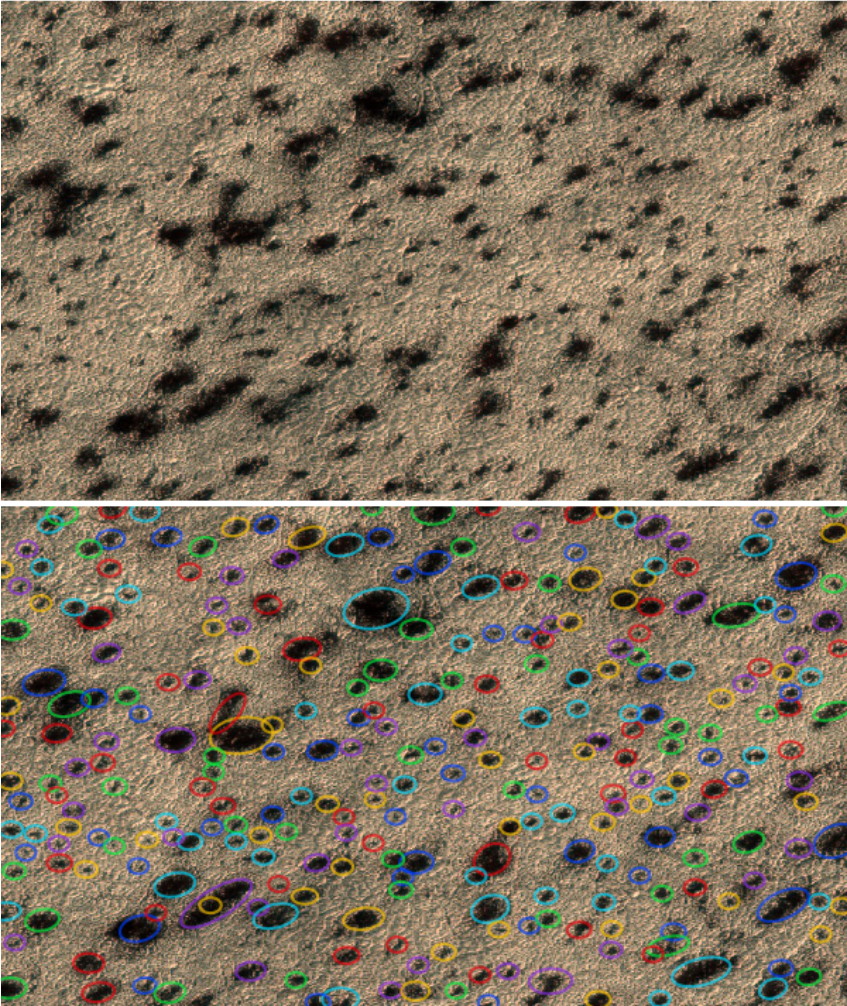
Clockwise from upper left: 1) Raw, 2) Fan markings, 3) Blotch markings, 4) Blotch reduction, 5) Fan reduction, 6) catalog entry with 50% majority vote

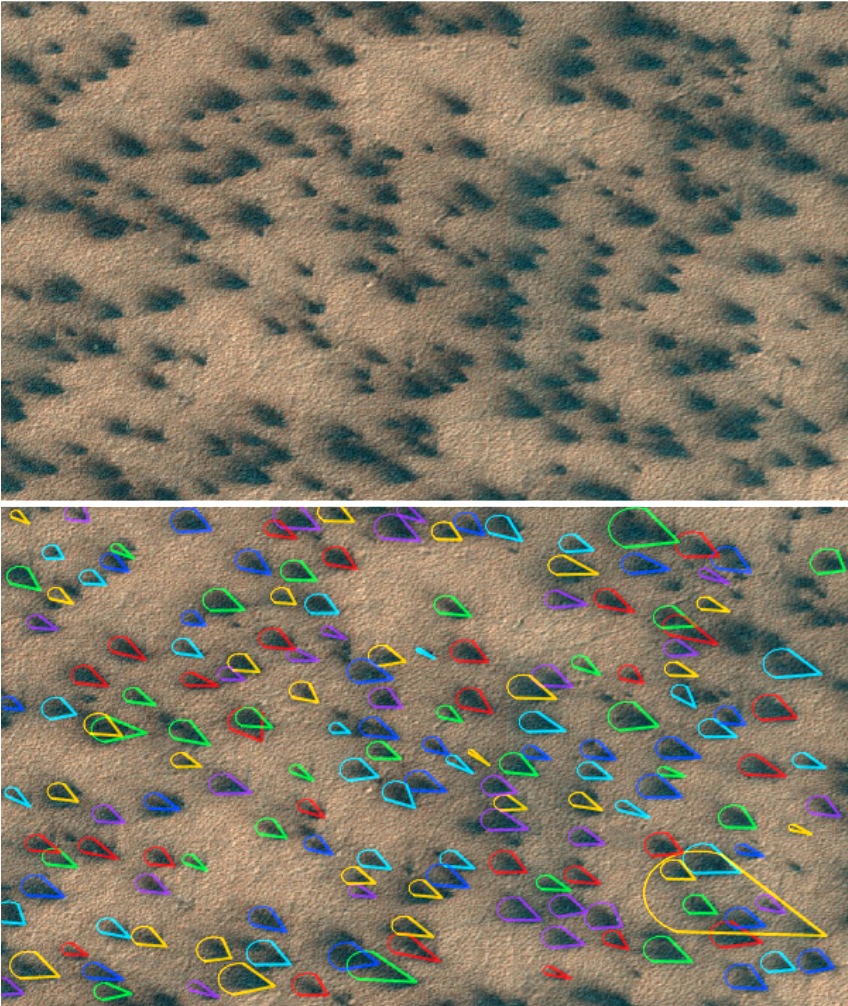
Catalog entries
Results

  • Over 40,000 citizens have contributed
    • Most only once
    • Core team of approx 10-20 volunteers did most of the work
  • now over 690,000 geo-located objects in catalog
  • available at zenodo “Planet Four Data Catalog” and via Python library “p4tools”

What can be done with it?

Portyankina et al. (2022) “Planet Four: Derived South Polar Martian Winds Interpreted Using Mesoscale Modeling”

Covered surface interests

  • Seasonal CO2 ice is quite bright
  • So, how much is covered by dark regolith?
  • -> energy balance of the surface and lower atmosphere
  • Previous work estimated 20-30% coverage, but only for a few locations and times

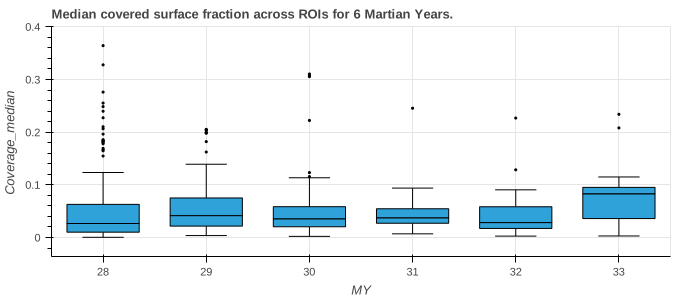
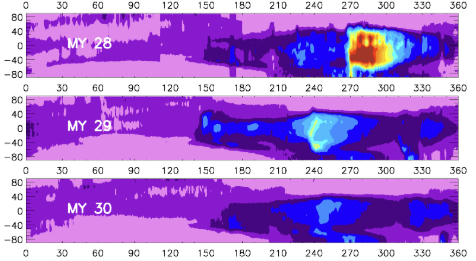
Surface coverage across years

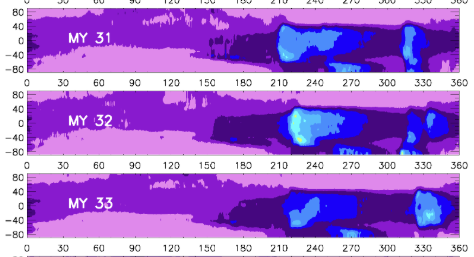
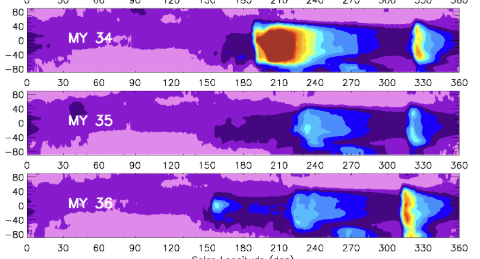
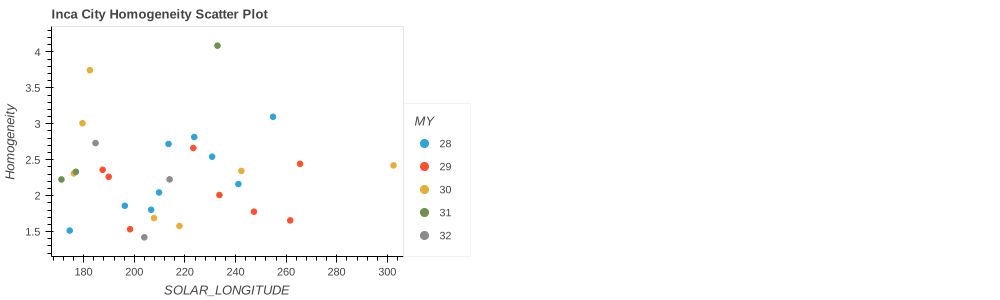
Relationship to global dust storms?
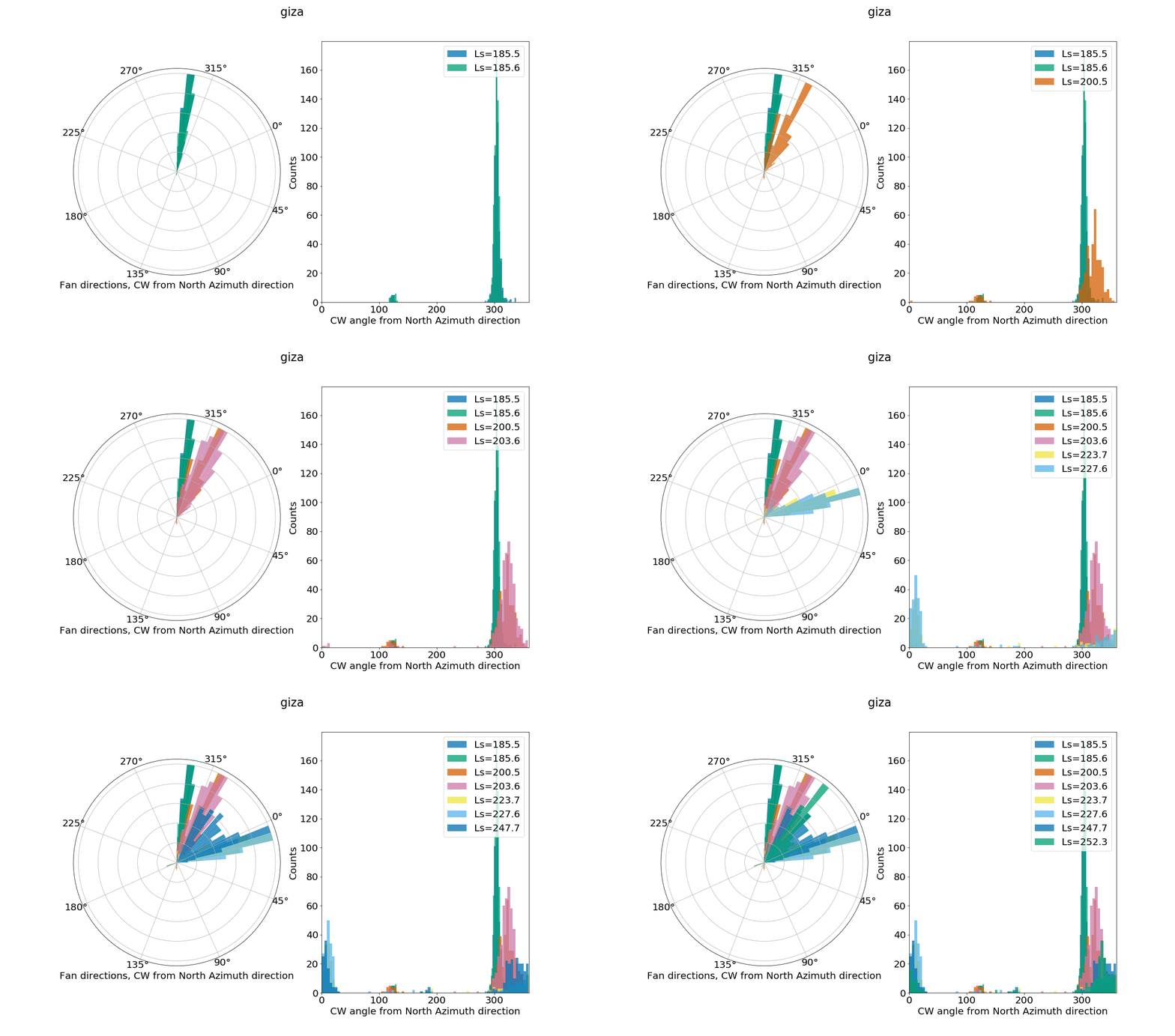
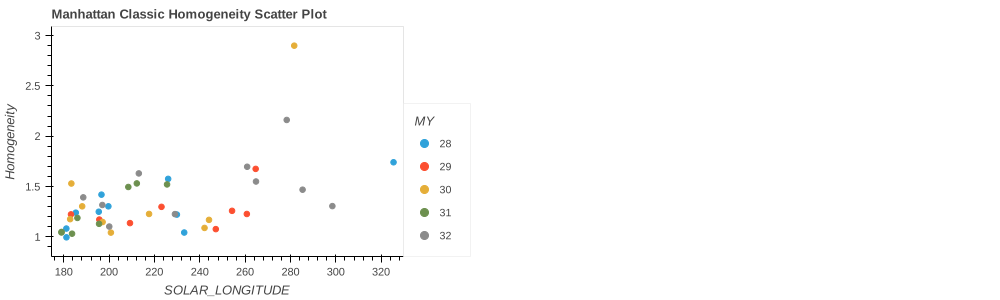
Intra-seasonal variability
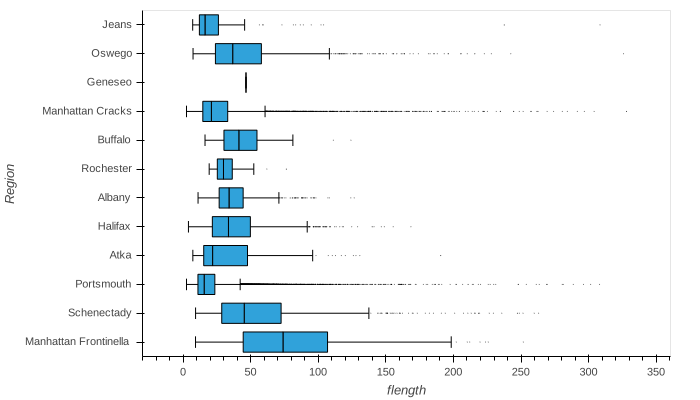
Fan lengths

Combo of jet and wind strengths
Conclusions

  • Surface coverage is very repeatable across years, but varies between ROIs
  • Relationship to global dust storms is being investigated
  • Surface coverage median fractions around 5 %.

References

Portyankina, Ganna, Timothy I Michaels, Klaus-Michael Aye, Megan E Schwamb, Candice J Hansen, and Chris J Lintott. 2022. “Planet Four: Derived South Polar Martian Winds Interpreted Using Mesoscale Modeling.” Planet. Sci. J. 3 (2): 31. https://doi.org/10.3847/PSJ/ac3087.